
Call us now :07313726227
 Send Inquiry
 Send Inquiry
Sulphates
Price 100 - 3000 INR/ Kilograms
MOQ : 1000 Kilograms
Sulphates Specification
- Application
- Detergents, Textile, Paper, Glass, Chemical Industry
- Properties
- White crystalline solid, odorless, non-flammable, soluble in water
- Structural Formula
- [Na]2[SO4]
- Grade
- Industrial Grade
- HS Code
- 28331100
- CAS No
- 7757-82-6
- Physical Form
- Powder
- Ph Level
- 6-8 (1% solution)
- Solubility
- Soluble in water
- Shelf Life
- 2 Years
- Appearance
- White Fine Crystalline Powder
- Density
- 2.66 Gram per cubic centimeter(g/cm3)
- Molecular Weight
- 142.04 g/mol
- Ingredients
- Sulphate compounds
- Usage
- Mainly used in detergent and glass manufacturing
- EINECS No
- 231-820-9
- Refractive Rate
- 1.468
- Poisonous
- NO
- Melting Point
- 884C
- Storage
- Store tightly closed in a dry and well-ventilated place
- Smell
- Odorless
- Shape
- Crystalline
- Product Type
- Inorganic Salt
- Purity
- 99%
- Molecular Formula
- Na2SO4
- Taste
- Saline
- Particle Size
- 60-80 mesh
- Free Flowing
- Yes
- UN Number
- Not assigned
- Calcium Content
- < 0.01%
- Bulk Density
- 1.46 g/cm³
- Iron Content
- < 0.01%
- Chloride Content
- < 0.1%
- Magnesium Content
- < 0.5%
- Lead Content
- < 5 ppm
- Stability
- Stable under normal conditions
- Grade Standard
- Technical Grade
- Packing
- 25/50 kg HDPE bags with inner liner
- pH Value (10% Solution)
- 6-7.5
- Hazard Class
- Not classified as hazardous
- Moisture
- Less than 0.5%
- Boiling Point
- Decomposes
Sulphates Trade Information
- Minimum Order Quantity
- 1000 Kilograms
- Supply Ability
- 100000 Kilograms Per Day
- Delivery Time
- 5-7 Days
About Sulphates
Sulphates are inorganic ions that are both found in nature and synthesised for industry. In the natural world, they occur as aerosols from biomass combustion and as part of the sulphur cycle of some micro organisms. Sulphates are also the salts and esters of sulphuric acid, a highly corrosive acid.Exceptional Purity and Safety
Our sodium sulphate meets stringent industrial standards, boasting 99% purity and ultra-low impurity content. It is classified as not hazardous, does not possess any odor, and is non-flammable, making storage and handling straightforward. The bulk density and moisture control ensure consistent quality, while 25/50 kg HDPE packaging keeps the product secure and free from contamination.
Versatile Industrial Applications
Widely utilized in detergent manufacturing, glass production, textile processing, and paper industries, sodium sulphate enhances product quality and facilitates efficient processing. Its saline taste, crystalline form, and excellent solubility make it adaptable for various chemical formulations, giving manufacturers flexibility and reliability across multiple sectors.
Reliable Storage and Long Shelf Life
Packed in sturdy HDPE bags with inner liners, our sodium sulphate remains dry and uncontaminated during storage. Store it tightly closed in a dry, well-ventilated area to maximize its 2-year shelf life. The products free-flowing property ensures ease of handling in large-scale industrial environments.
FAQs of Sulphates:
Q: How should sodium sulphate be stored to preserve its quality?
A: To maintain its high purity and prevent moisture absorption, sodium sulphate should be stored in tightly closed containers in a dry, well-ventilated place. Using the original HDPE packaging with inner liners is recommended for optimal storage.Q: What is the main process for using sodium sulphate in the detergent industry?
A: In detergent manufacturing, sodium sulphate acts as a filler and processing aid. It helps to bulk up detergent powders, improves flow properties, and maintains consistent particle size, contributing to effective cleaning performance.Q: When is sodium sulphate typically used in glass production?
A: Sodium sulphate is introduced during the early stages of glassmaking. It reacts with calcium and magnesium in the raw materials, helping to remove impurities and improve clarity in the final glass product.Q: Where is your sodium sulphate supplied from, and who can purchase it?
A: We manufacture, supply, and distribute sodium sulphate across India, catering to a wide range of industries. Orders can be placed directly through authorized distributors or our official supplier channels.Q: What benefits does sodium sulphate offer in textile processing?
A: In textile processing, sodium sulphate assists in dye penetration and uniform distribution during dyeing operations. Its saline properties help maintain appropriate ionic strength, resulting in vibrant and even coloration.Q: Is sodium sulphate safe to handle and transport?
A: Yes, sodium sulphate is not classified as hazardous or poisonous. It is non-flammable, non-toxic, and stable under normal conditions, making it safe for handling, storage, and transportation.Q: What is the typical usage level of sodium sulphate in industrial applications?
A: Typical inclusion levels depend on the specific application but are generally determined by required purity, solubility, and particle size. Its fine crystalline form and free-flowing nature allow for versatile and precise usage in detergents, glass, textiles, and paper industries.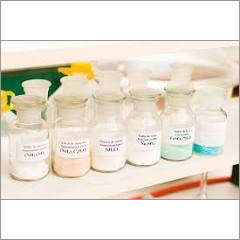
Tell us about your requirement

Price:
Quantity
Select Unit
- 50
- 100
- 200
- 250
- 500
- 1000+
Additional detail
Mobile number
Email

More Products in Hot Products - PERFORMANCE CHEMICALS Category

Sulfosuccinates .
Price 100 - 3000 INR / Kilograms
Minimum Order Quantity : 1000 Kilograms
Solubility : Soluble in Water
Ph Level : 5.0 7.0 (1% Solution)
Physical Form : Other, Liquid or Powder
HS Code : 3402

ethoxylate 1
Price 100 - 3000 INR / Kilograms
Minimum Order Quantity : 1000 Kilograms
Solubility : Soluble in water, alcohols, and many organic solvents
Ph Level : 6.0 8.0
Physical Form : Liquid
HS Code : 34021300
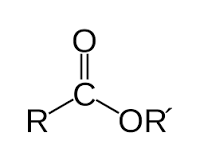
Esters .
Price 100 - 3000 INR / Kilograms
Minimum Order Quantity : 1000 Kilograms
Solubility : Insoluble in water, soluble in alcohol and ether
Ph Level : Neutral (67)
Physical Form : Liquid
HS Code : 29155000
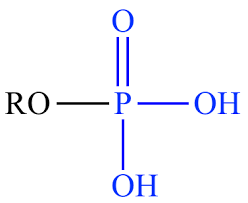
Phosphate Esters
Price 100 - 3000 INR / Kilograms
Minimum Order Quantity : 1000 Kilograms
Solubility : Insoluble in water, soluble in organic solvents
Ph Level : 6.0 8.0
Physical Form : Liquid
HS Code : 29199090

 Send Inquiry
Our Products
- Synthetic Thickner
- Emulsifiers for Paint and Pigments
- Color Pigment
- Guar Gum
- Textile Binders
- Auxiliaries Chemicals
- Inorganic Pigment
- Azo Pigment
- Dispersant Chemicals
- Binders Chemical
- Solvent Dyes
- Fluorescent Whitening Agent
- Silicone Textile Softeners
- Scouring Agent
- SHMP
- PCRP
- Polymer Additive
- OB(Optical Brightener)
- OT
- DEG(Di Ethyle Glycol)
- Precipitated Silica
- Emulsifiers for White Phenyl
- Emulsifiers for Pigments and Polymers Emulsions
- Emulsifiers for Pharmaceutical, Food, Cosmetic and
- Plasticizers Chemical
- Ethoxylates Chemical
- Esters Chemical
- Labsa Linear Alkyl Benzene Sulphonic Acid
- Polishing Spray
- Hot Products - PERFORMANCE CHEMICALS
- Sizing & Bio Degradable Plastic
- Silicone oil & Amino Silicone oil

B 11, Harekrishana Complex,Ahmedabad - 380028, Gujarat, India

Mr Ravi
(Director)
Mobile :07313726227
 Send Inquiry
 Send SMS
Developed and Managed by Infocom Network Private Limited.
